Jesse Alston

Big data and rapidly improving statistical and computational tools are enabling researchers to answer previously unanswerable questions. I use these emerging tools to quantify the mechanisms that dictate how large mammals interact with each other and their environments, then apply that knowledge to conservation practice. My research program integrates movement ecology, rangeland ecology, remote sensing, and conservation science to characterize how and why animals move across the landscapes they inhabit, identify data-driven pathways for wildlife-livestock coexistence, and develop new approaches for conserving wildlife and ecosystems. About half of my research is focused overseas, where I work to build in-country conservation capacity by partnering with local organizations and students.
I grew up in Littleton, North Carolina (pop. ~500), went to Davidson College for a BA in Environmental Studies (Economics minor), received my PhD in Ecology (Statistics minor) in the Goheen lab at the University of Wyoming, and did postdoctoral research in the Calabrese lab at the Center for Advanced Systems Understanding in Germany. I am now an Assistant Professor in the Wildlife Conservation and Management program in the University of Arizona’s School of Natural Resources and the Environment. When I am not science-ing, I am usually reading (favorite books: The Passenger by Cormac McCarthy, Warlock by Oakley Hall, Independent People by Halldor Laxness), watching the Green Bay Packers, or looking for critters with my family. Favorite mammal: Pseudois nayaur
Click here for my CV. Click here for my Google Scholar profile.
Brett Blum

Brett has a full-time job as director of the Southern Arizona Experiment Station, and is also pursuing a PhD in the School of Natural Resources and the Environment at the University of Arizona, where he is studying pathways for improving wildlife conservation alongside livestock production. Brett is originally from Flagstaff, Arizona, and completed his BSc and MSc in the wildlife program in SNRE, where he focused on bighorn sheep in the Santa Catalinas. Brett is one of the world’s top ten or so experts on Coues’ deer, and his limited free time is often spent searching Arizona’s open spaces for them (and other large mammals) with his wife and daughters in tow (or increasingly, vice versa). Favorite mammal: Nasua narica
Click here for Brett’s CV.
Allie Burnett
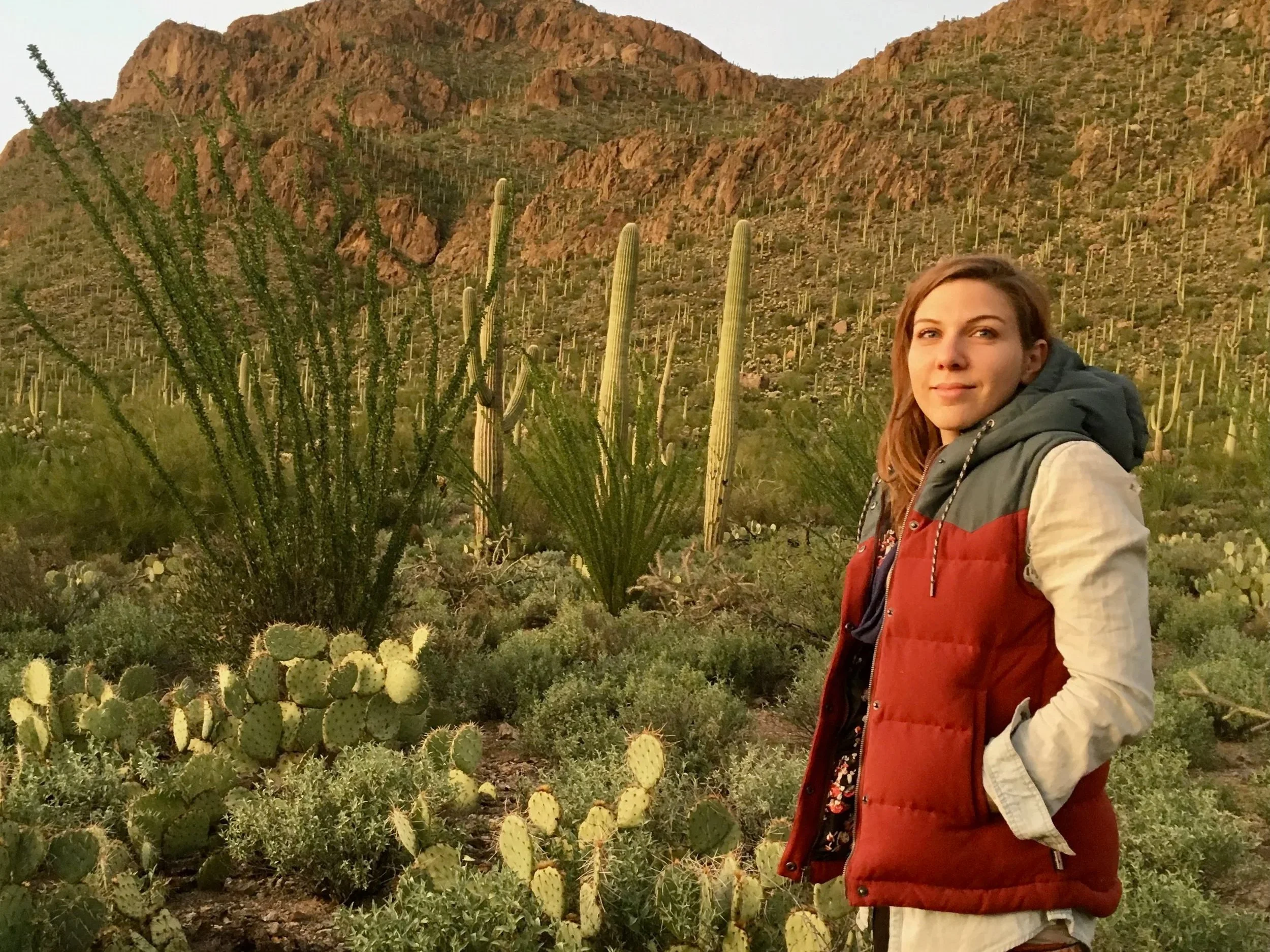
Allie is a postdoctoral researcher in the research group, where she is working with The Nature Conservancy and the Lovejoy Center for Bridging Biodiversity, Conservation Science, and Policy to map wildlife connectivity across southeastern Arizona’s Sky Islands and grasslands. She is co-advised with Wim van Leeuwen. Allie is originally from Auburn Hills, MI (of Malice at the Palace fame), completed her BSc at Michigan State University and her MSc and PhD at the University of Arizona, and was a postdoctoral researcher for Javan Bauder at UA before joining the research group. In her spare time, you can find Allie gardening, hiking, rock climbing, camping, backpacking, painting, or reading. Fun fact: Allie’s home is populated by over 200 plants, presumably all of them intentionally cultivated. Favorite mammal: Crocuta crocuta
Click here for Allie’s CV. Click here for Allie’s Google Scholar profile.
Celine Wandia Karoki

Celine is an MSc student in Environmental Science at Kenyatta University, where she is studying patterns of livestock depredation in Laikipia, Kenya. Celine grew up in Kajiado County, Kenya, and received her BSc in Environmental Studies from Karatina University. In addition to her MSc work, she has a full-time job as an outreach officer for the Laikipia-Samburu Wild Dog Project. When she is not studying or coordinating social media campaigns, Celine tries to spend her time outdoors, traveling, and with her young son. Favorite mammal: Lycaon pictus
Click here for Celine’s CV.
Gila Goodwin
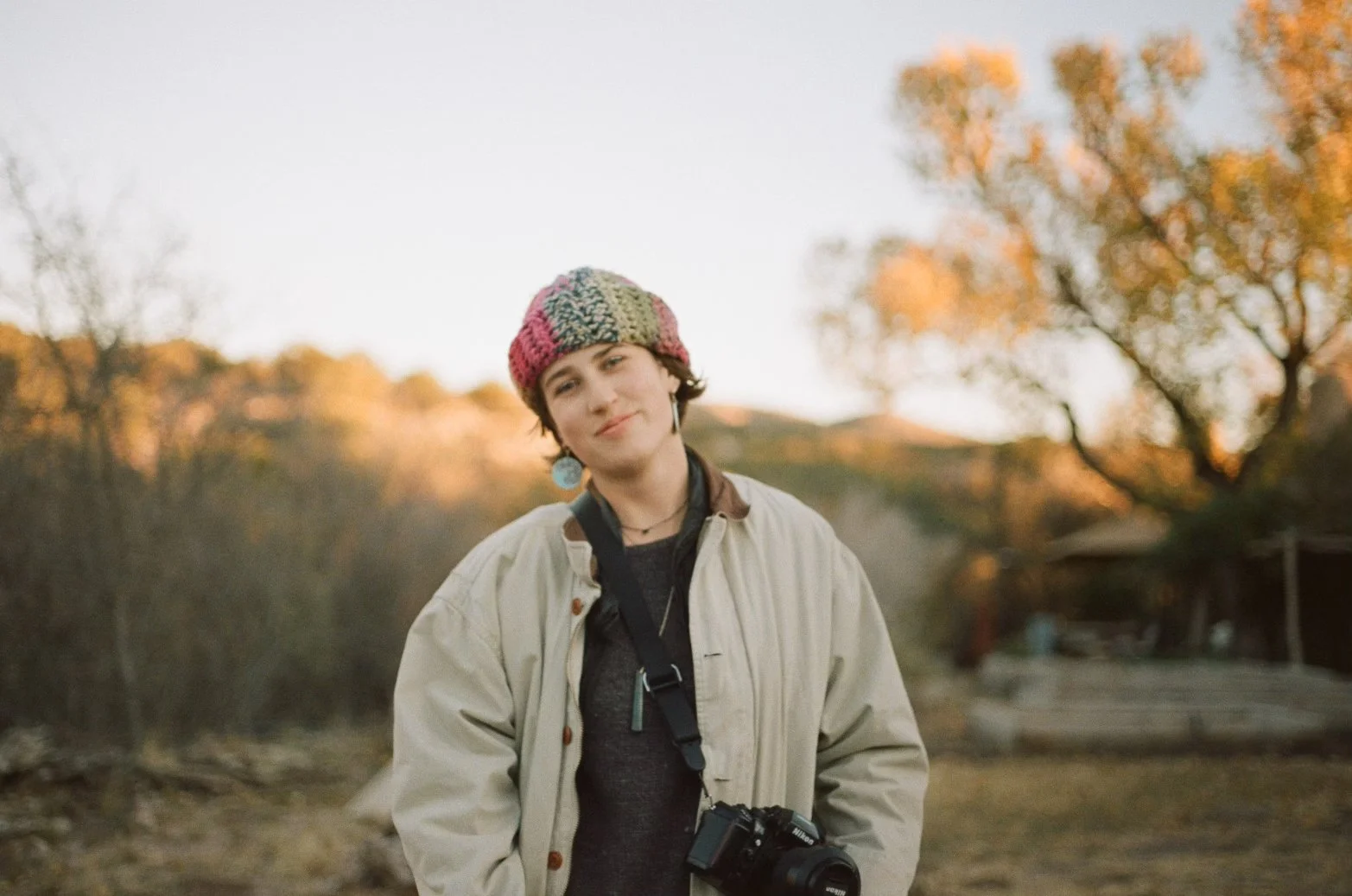
Gila is an MSc student and CAMBIUM NRT Fellow in the School of Natural Resources and the Environment at the University of Arizona, where she is studying the distributions of native riparian trees with an eye toward improving riparian restoration. Gila grew up in Tucson and on a conservation ranch near Douglas, Arizona, received a BA in Environmental Science (Anthropology minor) from Colorado College, and trained horses for a couple of years before returning to Tucson. When Gila is not science-ing and teaching horses to herd cattle or prance, she enjoys backpacking, skiing, film photography, spinning wool, knitting, and sewing. Favorite mammal: Panthera onca
Eduardo Gracia Escalante

Eduardo is an MSc student in the School of Natural Resources and the Environment at the University of Arizona, where he is studying the impacts of the US-Mexico border wall on the mammal community of Organ Pipe Cactus National Monument and Pinacate Biosphere Reserve using camera traps. Eduardo grew up in Hermosillo, Sonora, and received his BSc in Biology from Universidad de Sonora before working as a wildlife technician in northern Sonora and restoration technician for Borderlands Restoration Network in Patagonia, AZ. When he is not exploring nature, Eduardo enjoys gardening, reading, and cooking. También le gusta ayudar a otros a aprender español. Favorite mammal: Leopardus pardalis
Click here for Eduardo’s CV.
Olivia Guswiler

Olivia is a research scientist and MSc student in the School of Natural Resources and the Environment at the University of Arizona, where she is studying the influence of outdoor recreation on wildlife in the Altar Valley southwest of Tucson. Originally from Michigan, Olivia obtained her BSc in Zoology from Michigan State University. She made her first trek to Tucson to study predator-prey interactions between southern grasshopper mice (Onychomys torridus) and Arizona bark scorpions (Centruroides sculpturatus). Before joining the lab, she also worked for NEON on the Santa Rita Experimental Range and has worked for the last several years as a lab coordinator for a large neuroscience lab on campus. Outside of research, she enjoys backpacking, cross-country road trips, creating stained glass, knitting, and crocheting. Favorite mammal: Macrotis lagotis
Click here for Olivia’s CV. Click here for Olivia’s Google Scholar profile.
Di’Ayne Harvey
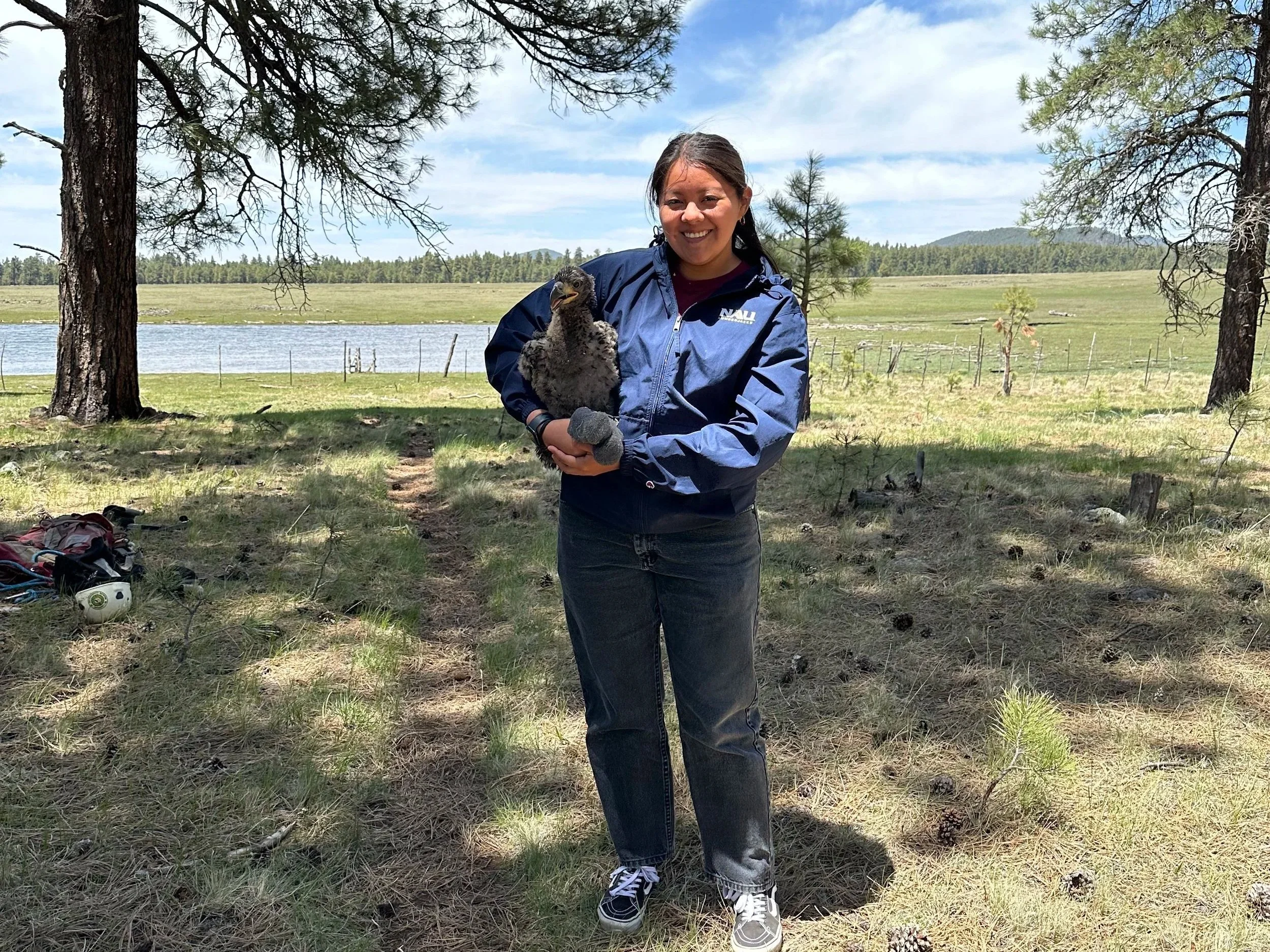
Di’Ayne is a research technician and undergraduate student in Biology at Northern Arizona University, where she is starting a project to map pronghorn and Gould’s turkey habitat suitability across Apachería. She will be joining the lab as a master’s student in the fall! Originally from Whiteriver, Arizona, Di’Ayne’s hobbies include running, reading, and crocheting, and she was the 2018-2019 Miss White Mountain Apache Rodeo Queen. Favorite mammal: Ailuropoda melanoleuca
Shane Myers
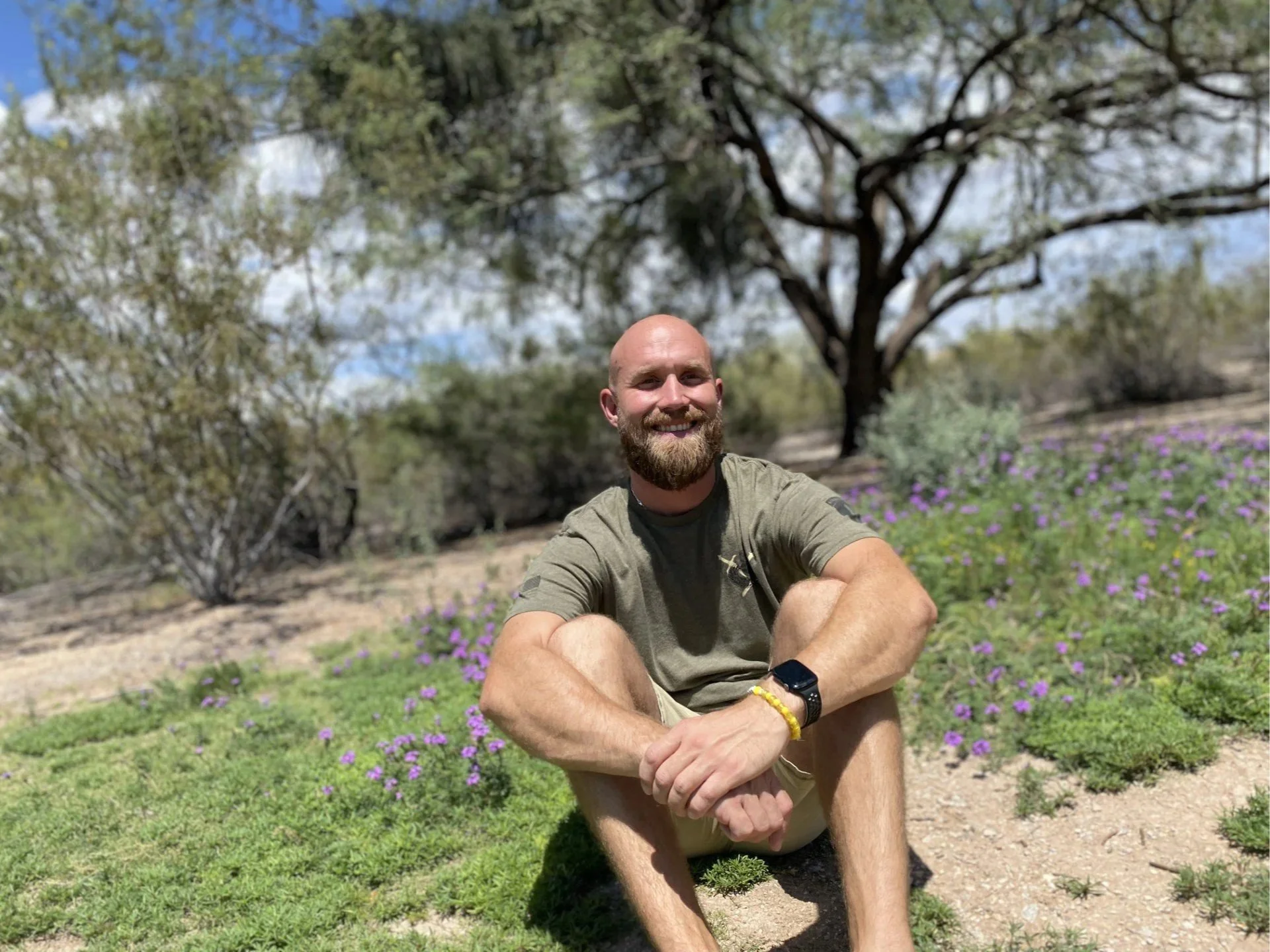
Shane is an undergraduate student in Wildlife Conservation and Management at the University of Arizona, where he is assisting on our efforts to map wildlife presence across the Tucson metropolitan area and willows in southeastern Arizona’s riparian areas. Shane grew up in Houston, Texas, and Tucson, and worked as a canine handler and trainer for the Air Force before coming to UA. In his free time, he enjoys hiking, biking, and dog training. Favorite mammal: Canis rufus floridanus
George LeGrange Opiyo
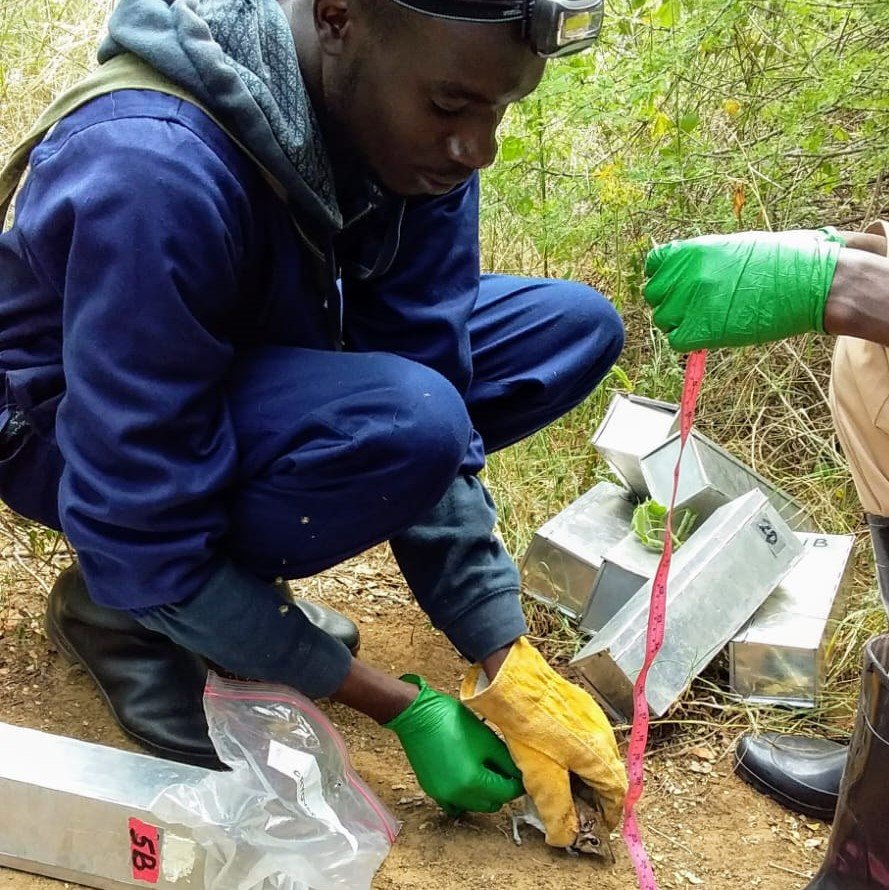
George is an MSc student at Karatina University and research technician at Mpala Research Centre, where he works for the UHURU experiment and studies the movement behavior and habitat selection of rufous sengis (Galegeeska rufescens). He is a master small mammal handler, having worked with the National Museums of Kenya for years before starting work at Mpala. George grew up in Kisumu, Kenya, and received his BSc in Natural Resources and Wildlife Management at Karatina University. In his free time, he hones his basketball skills (modeling his game after Kevin Durant) and is known to wake up at 4 am to watch NBA playoff games. Favorite mammal: Tragelaphus imberbis
Click here for George’s CV.
Owino Otieno Raymond

Raymond is a PhD student in the School of Natural Resources at the University of Arizona, where he is studying the ecology and conservation of reticulated giraffes and Guenther’s dik-diks, among other species. Raymond grew up in several different towns throughout Kenya and received his BSc in Wildlife Management at Maasai Mara University and MSc in Biology of Conservation from University of Nairobi. Raymond has an impressive track record in conservation already, having received several highly competitive awards including the Conservation Leadership Programme, the American Society of Mammalogists’ African Research Fellowship, and the Society for Conservation Biology’s Graduate Student Research Fellowship. In his free time, he enjoys meeting new people, learning new languages and cultures, cooking, tennis, and photography. Fun fact: Raymond has traveled to all but three counties in Kenya. Favorite mammal: Mellivora capensis
Click here for Raymond’s CV. Click here for Raymond’s Google Scholar profile. Click here to read a Q&A on Raymond’s work from the SCB, and here for one from WildLabs.
Yekson Tabuni

Yekson is an undergraduate student in Wildlife Conservation and Management at the University of Arizona, where he is assisting on the various camera trapping projects being led by members of the research group. He is from West Papua, Indonesia. In his free time, he enjoys playing soccer, rugby, and volleyball. Favorite mammal: Panthera leo
Click here for Yekson’s CV.
Sami Toghyani
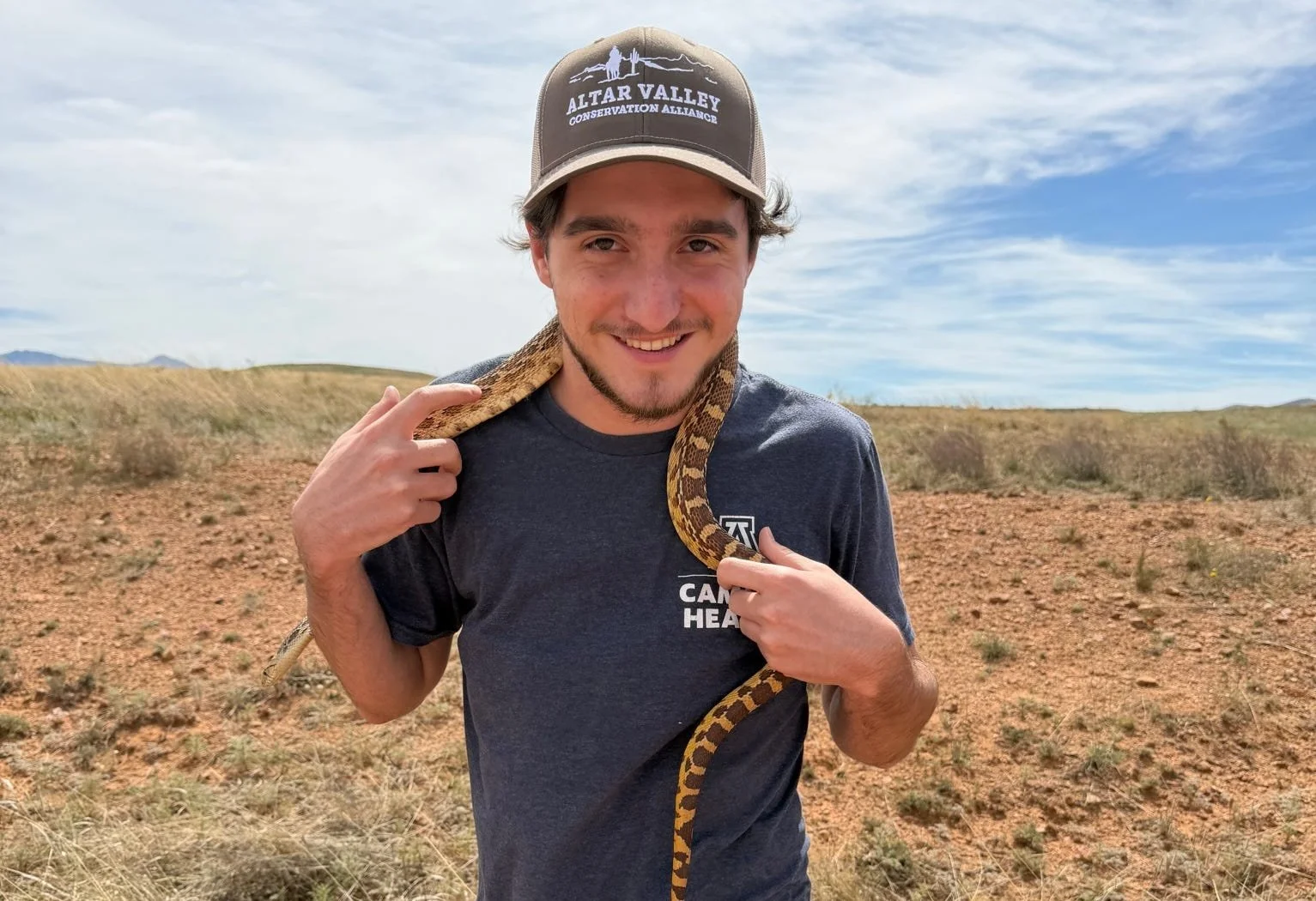
Sami is an undergraduate student in Wildlife Conservation and Management at the University of Arizona, where he is working on our various camera trapping projects. He is also Secretary of the UA Fish and Wildlife Society, in which capacity he is starting a project on bird morphology in urban versus rural areas. He grew up in Scottsdale, Arizona, and he spends his free time outdoors, particularly herping, birding, and hiking (to the point where I regularly run into Sami on the trails around Tucson). Fun fact: Sami can name the capital of every country in the world. Favorite mammal: Martes flavigula
Joao Weisshaupt

Joao is the Range Manager on the Santa Rita Experimental Range and an MSc student in Wildlife Conservation and Management at the University of Arizona, where she is working with Organ Pipe Cactus National Monument to study bobcat movements at the US-Mexico border. Joao grew up in southern Germany, and did many handy things (mechanic work, farm labor, etc.) before coming to UA for her BSc. In her free time, she enjoys restoring old furniture and vintage cars, as well as thrifting, cooking, and baking. She also plays the clarinet and trumpet. Favorite mammal: Erinaceus europaeus
Click here for Joao’s CV.